Overview
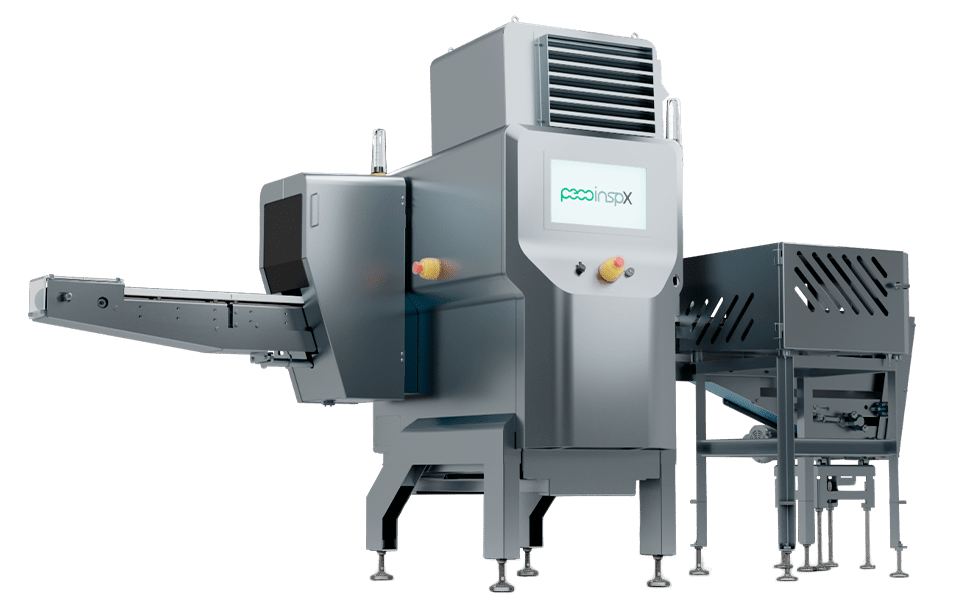
Food manufacturers producing sauces and similar products in glass jars face a critical challenge: detecting glass contaminants that may accidentally enter the product during filling, capping, or transport. Traditional inspection methods often fall short, particularly when it comes to identifying glass in glass, due to the inherent difficulty of distinguishing foreign material from the container itself.
Bottom Line Improvements
Reduce Product Loss
Minimize Breakage
Improve Uptime
Increase OEE
Reduce Bottlenecks
Improve Scalability
Avoid Product Spoilage
Identify Foreign Material
Key Features
Defects and Deficiencies
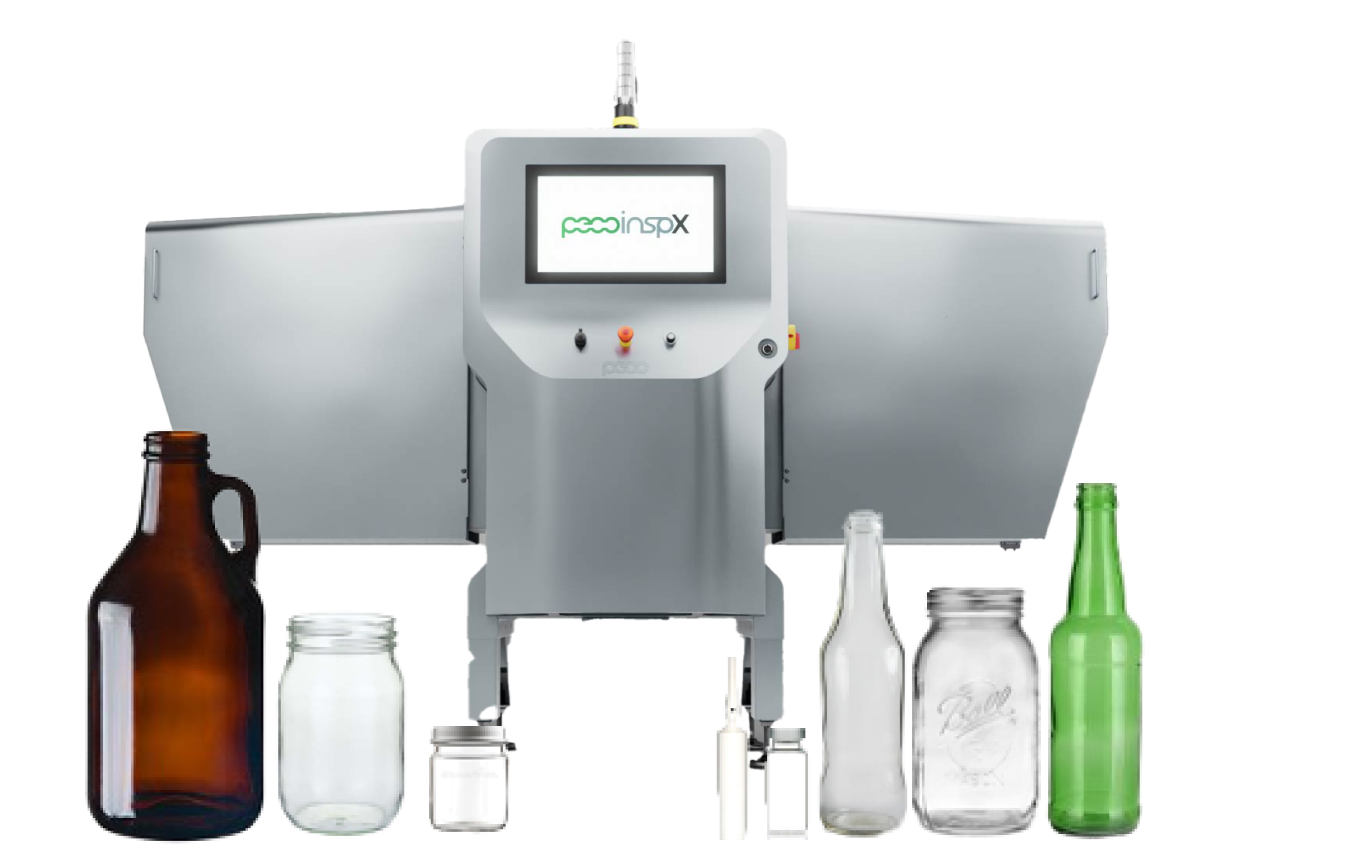
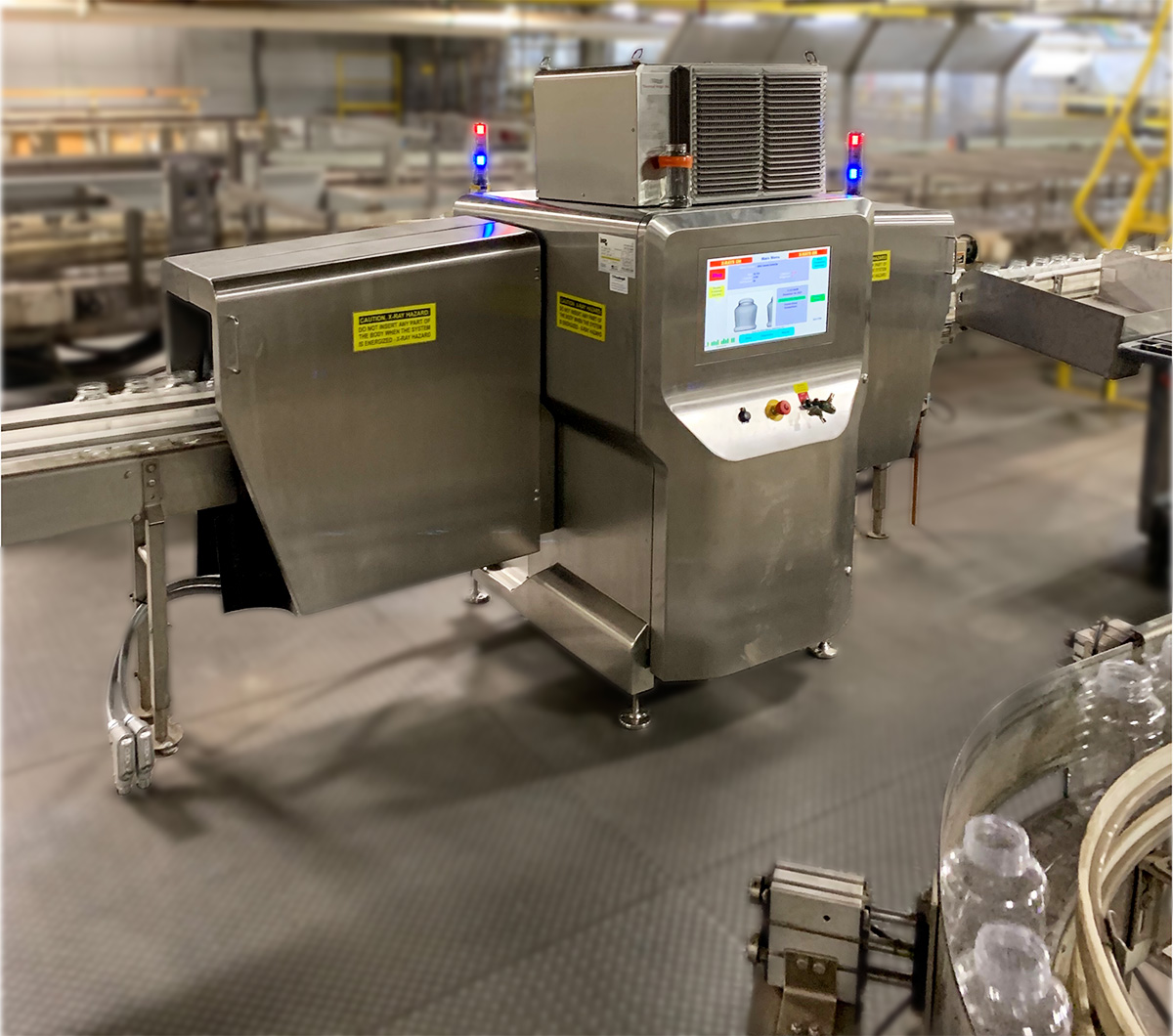
Peco InspX’ EGX Solution provides a full container inspection of each jar or bottle. Suspect containers can be ejected before reaching the filler. Every inspection creates three images that can be retained for later cross reference and analysis – an aid in identifying persistent trends or container characteristics.
EGX identifies an extensive range of glass container defects to include:
Inconsistent Height
Blemishes
Clearware
Swabbed Cavity
Holes
Thin Sidewall
Swung Baffles
Shards
Inclusions
Thread Defects
Bird Swings
Finish Defects
Unmelted Cullet
Punt Defects
Internal Bubbles
Crack

Finish Area Defect
Thin Wall

Sidewall Inclusion

Inclusion

Heel and Punt Defect

Bubbles, Inclusion

Side Wall Inclusion

Bird Swing

Swung Baffle
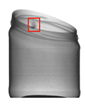
Clearware

Unmelted Glob
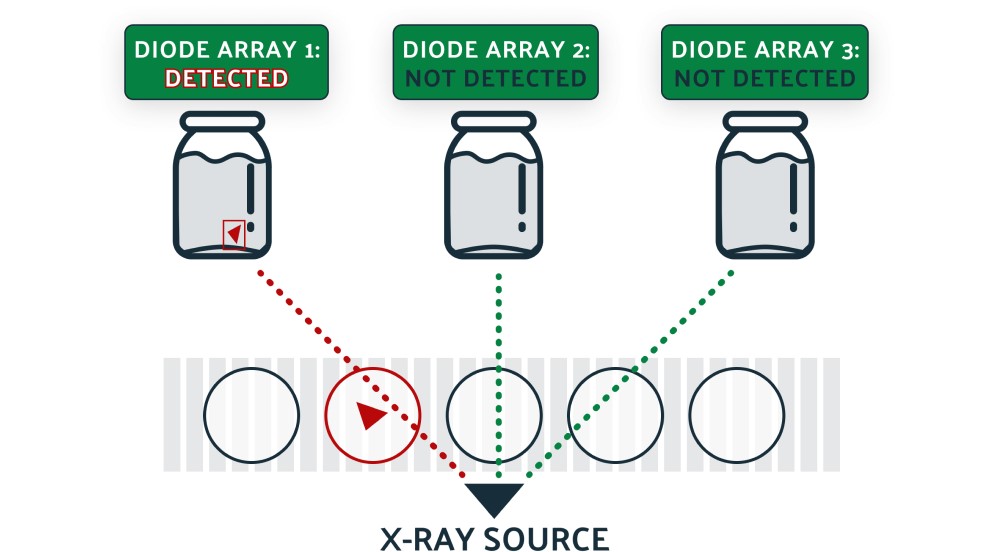
Three Beam Advantage
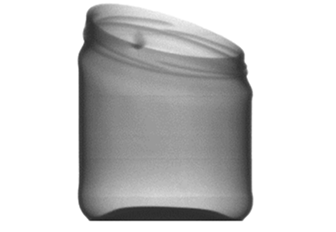
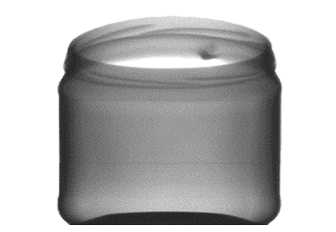
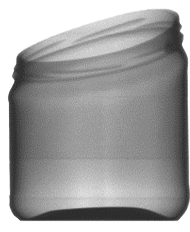
Multiple views of each container ensure that defects and abnormalities in every side of the empty container are inspected and analyzed.
Three Beam Advantage
Why X-Ray? Why Now?
Conventional vision approaches – developed long ago – inspect empty glass containers using vision/camera based systems pre-dating the development of advanced X-ray inspections. 20 years ago, Peco InspX introduced the first high-speed rigid package inspection systems and further pioneered multiple beam (two and three) glass systems 5 years later. Subsequent innovations debuted in the “Shield Series” ScanTrac Trio – improving performance over that delivered by camera systems exponentially.
X-Ray's Superiority Over EBI/Vision Systems
Capability
Peco InspX ScanTrac Trio EGX
EBI/Vision/Camera
Container handling
Complete inspection from a single position.
Requires container rotating through banks of cameras.
Container Density
Wall thickness measure simultaneous with inspection.
Not available.
Maintenance
Installs over existing conveyors with no container contact.
Requires separate conveyor or positioning apparatus associated with rotary or in-line empty bottle inspectors.
Changeover
No physical change required for multiple container dimensions.
Changes in containers (esp. diameters) require physical adjustment of cameras and angles.
False Rejects
Accommodates embossed and wet containers. Complete inspection of threaded necks and sidewalls.
Embossing and moisture causes poor inspection and large false reject rate.
Design
Purpose built to inspect for today’s containers. One way glass traveling great distances between molding and filling.
Developed in an era focused on two-way glass concerns. Cigarette butts and debris in the rinsed bottle, largely absent today.
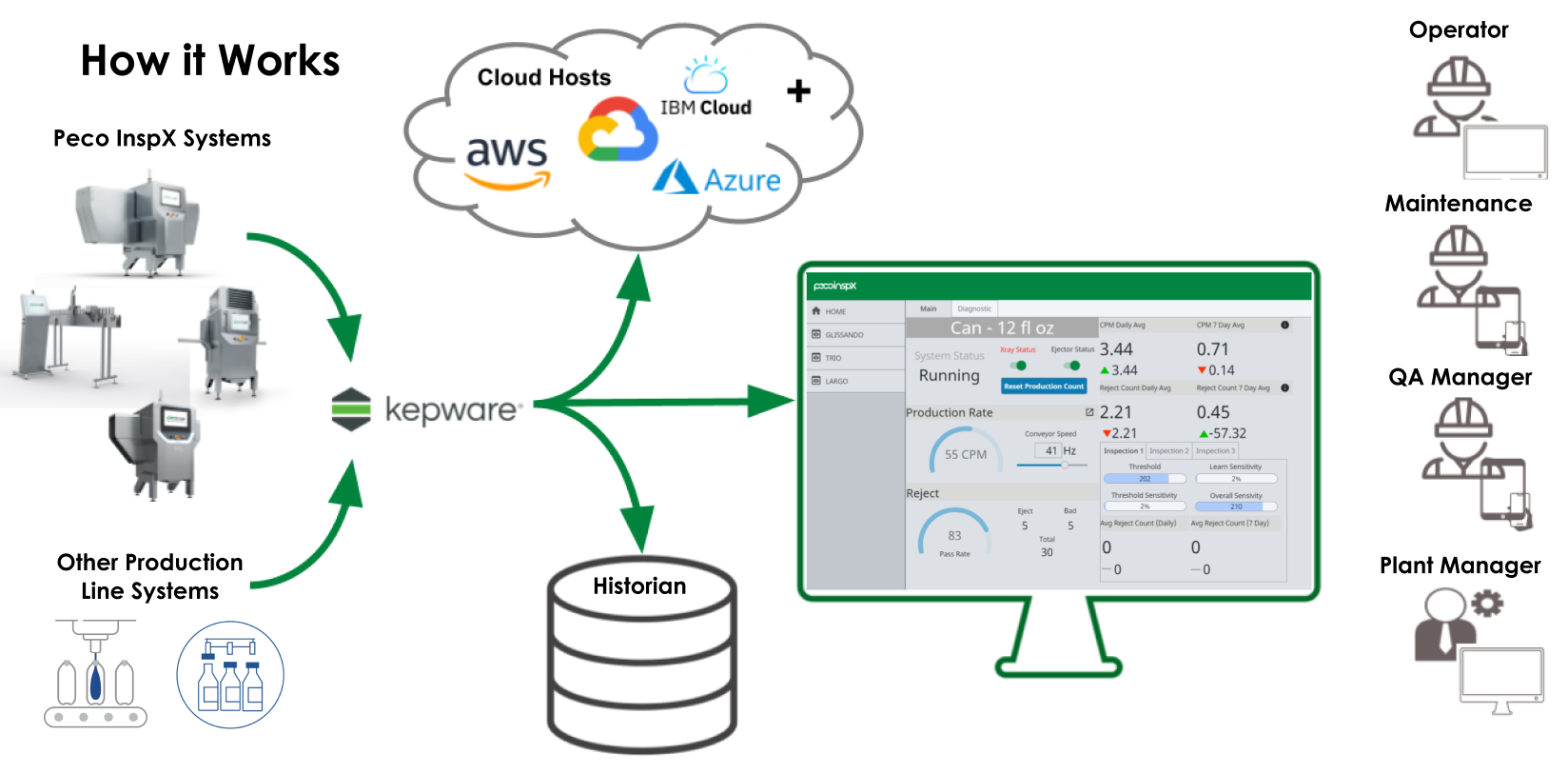
Industry 4.0 Integration Ready
Peco InspX engineered its ScanTrac Trio, a high-speed X-ray inspection system, specifically for glass-in-glass applications. The system features three X-ray beams positioned at different angles, which allows it to see around obstructive features like the punt and detect contaminants that would otherwise go unnoticed.
Fully Customizable
Future Proof
Real Time Alerting
Real Time Data
About Peco InspX
Peco InspX provides high-performance X-ray inspection solutions for the food, beverage, personal care and life science industries. Our diverse range of technologies and platforms supports a broad range of applications, across various package types and conveyance mechanisms.
Our inspection systems support the highest production speeds and deliver the best quality inspection with the lowest false reject rate.
Peco InspX also offers a variety of solutions for cap and foil inspection as well as traditional fill level monitors and dud detectors.
We also design and manufacture our own ejection devices to meet the diverse requirements of package size, shape and speed.