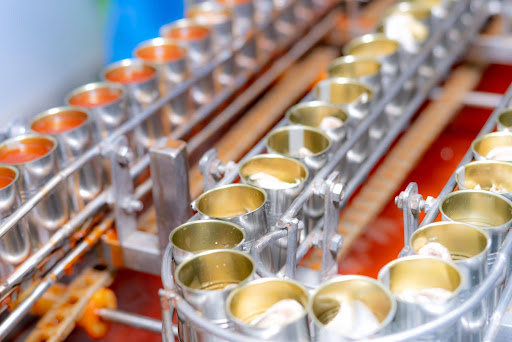
Multi-fill canning lines are among the most difficult environments to inspect accurately. When containers receive multiple product additions — solids first, then brines, sauces, or gravies — traditional checkweighers struggle to keep pace with the complexity. The result is higher false reject rates, inconsistent fill verification, and unnecessary downtime.
X-ray inspection solves these problems in ways that contact-based checkweighers simply cannot.
What Is Multi-Fill Canning — and Why Is It Hard to Inspect?
Multi-fill canning is common in seafood, pet food, prepared meals, and specialty vegetable processing. Unlike a single-fill beverage line — where a checkweigher measures weight before and after a single fill event — multi-fill lines introduce variables that compound at every step:
- Multiple components: Solid ingredients are loaded first, followed by liquid fills. The ratio of solids to liquids varies from can to can.
- Uneven distribution: Solids don’t always settle uniformly, shifting the weight distribution and throwing off contact-based weight reads.
- Moisture absorption: Some solids absorb liquid during processing, changing the weight profile between inspection and sealing.
- Surface variability: Splash, foam, and uneven fill levels confuse systems that rely on surface measurement.
Each of these factors introduces error into a traditional checkweigher’s read — driving false rejects, yield loss, and line stoppages.
How X-ray Inspection Handles Multi-Fill Complexity
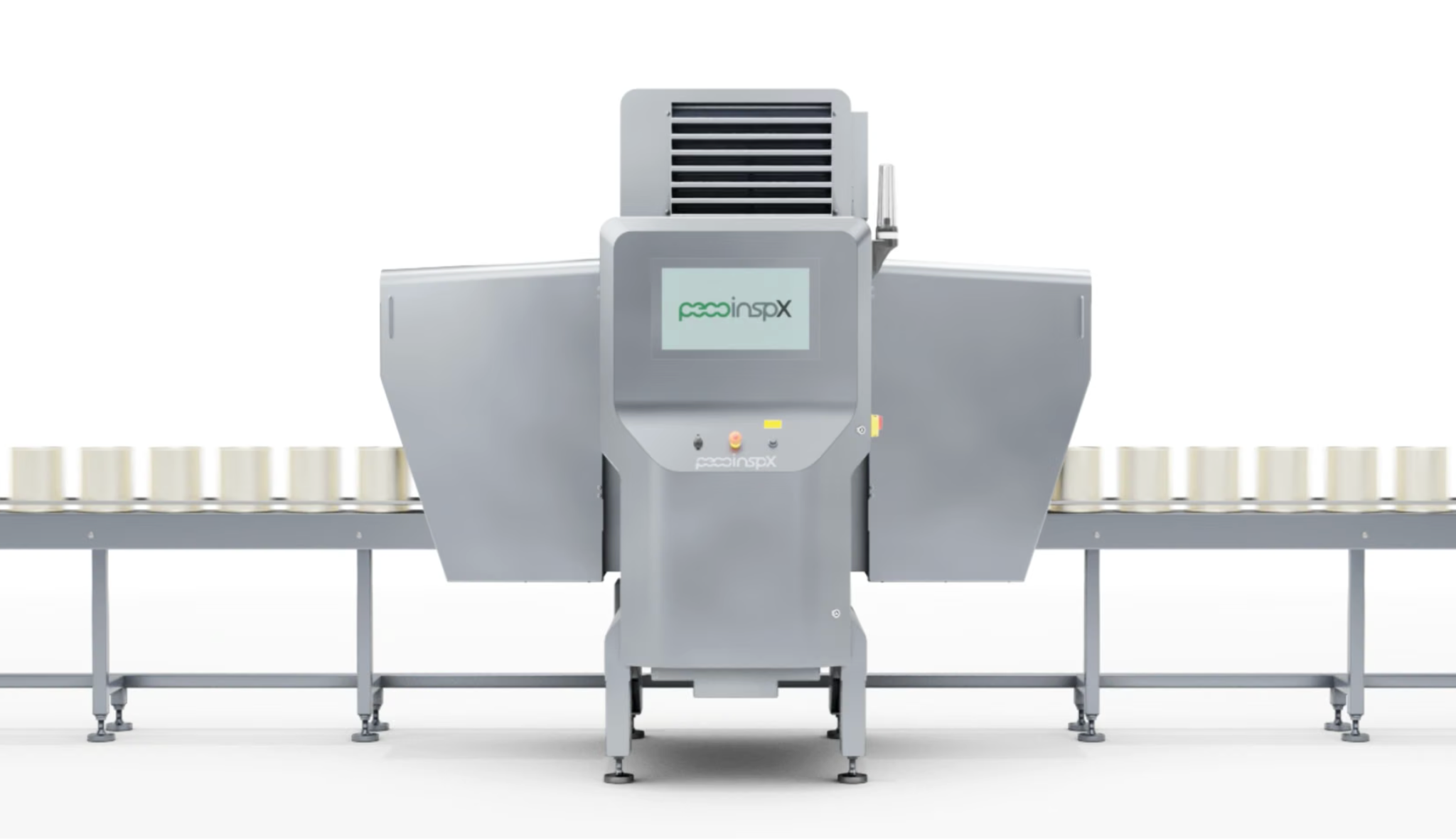
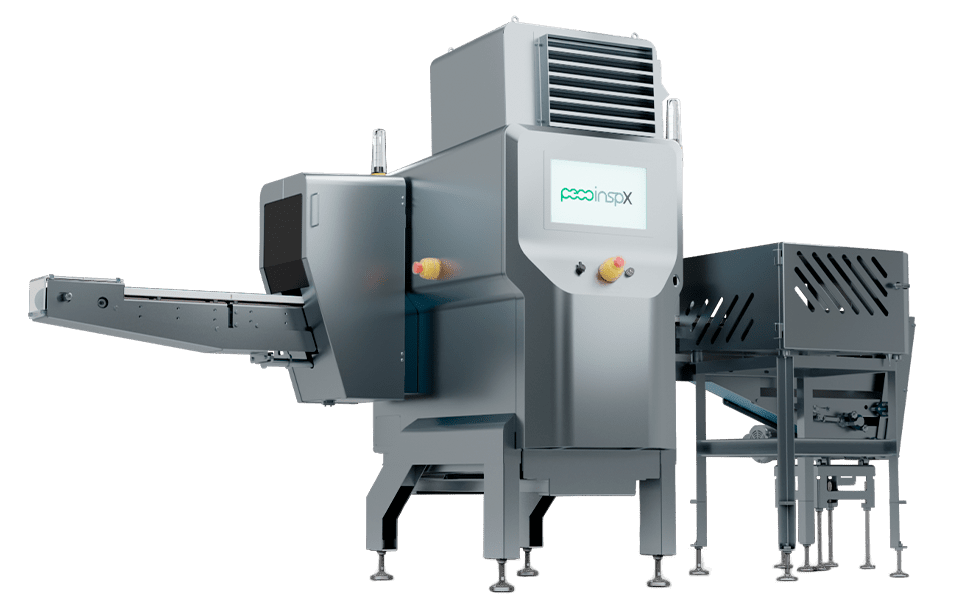
Peco InspX X-ray systems don’t measure surface weight. They analyze the density profile of the entire container — which means fill distribution, layering, and settling have no effect on inspection accuracy.
Accurate Fill Verification Regardless of How Product Is Distributed
X-ray measures total mass inside the container, not the container’s center of gravity. Unevenly distributed solids, floating ingredients, or layered fills are all captured in the same density image. The system verifies fill completeness based on what’s actually inside — not where it happens to be sitting.
High-Speed Inspection With No Line Impact
Peco InspX systems are designed for high-speed canning environments, operating at 2,000+ containers per minute. Multi-fill complexity doesn’t change the inspection speed. Defective or underfilled containers are identified and rejected in real time without creating a bottleneck.
Foreign Material Detection at the Same Inspection Point
While verifying fill levels, Peco InspX X-ray systems simultaneously detect foreign material contamination — metal, glass, bone, stone, and dense plastics. A traditional checkweigher offers none of this. One inspection point replaces two, reducing equipment footprint, maintenance overhead, and potential points of failure on the line.
Filler Head-Level Process Data
Every container generates a granular inspection record. Fill inconsistencies can be traced back to individual filler heads, giving operators actionable data to address upstream problems before they compound. This level of process visibility is not available from a contact checkweigher.
X-ray Checkweigh vs. Traditional Checkweigher: A Direct Comparison
| Traditional Checkweigher | Peco InspX X-ray | |
| Works on multi-fill products | Limited | Yes |
| Affected by uneven distribution | Yes | No |
| Line speed | Often requires slowdown or line splitting | 2,000+ CPM, no slowdown |
| Foreign material detection | No | Yes |
| Filler head diagnostics | No | Yes |
| Contact with product/container | Yes | No (non-contact) |
Frequently Asked Questions
Can X-ray inspection replace a checkweigher on a multi-fill canning line? In most cases, yes. Peco InspX X-ray systems verify fill levels with a standard deviation of ±2%, which meets or exceeds the accuracy of a traditional checkweigher — while also performing foreign material detection in the same pass.
What types of products are best suited for X-ray checkweigh on multi-fill lines? Seafood, pet food, prepared meals, beans, and specialty vegetables are among the most common applications. Any product where solid and liquid fills vary from container to container benefits from density-based inspection over contact weight measurement.
Does X-ray inspection slow down the canning line? No. Peco InspX systems are non-contact and designed for high-speed environments. They mount over existing conveyance and do not require line slowdowns, spacing adjustments, or format-specific recalibration downtime.
What happens when a defective or underfilled container is detected? The system triggers an automated ejector to remove the container from the line in real time. Rejection is logged with full inspection data for traceability and process review.
The Bottom Line
For multi-fill canning operations, conventional checkweighing alone leaves gaps — in accuracy, in speed, and in detection capability. X-ray inspection from Peco InspX closes those gaps with a single, compact system that verifies fills accurately, detects foreign material, and gives operators the process data they need to run a tighter line.
Ready to see how X-ray inspection performs on your product? [Contact us for a line assessment or send us your containers for a live test.]