
Glass Containers
X-ray Inspection for
Glass Containers
X-ray Inspection for Glass Containers
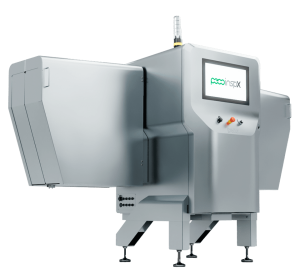
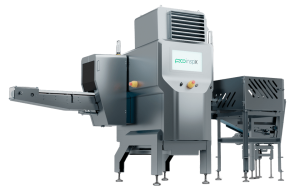
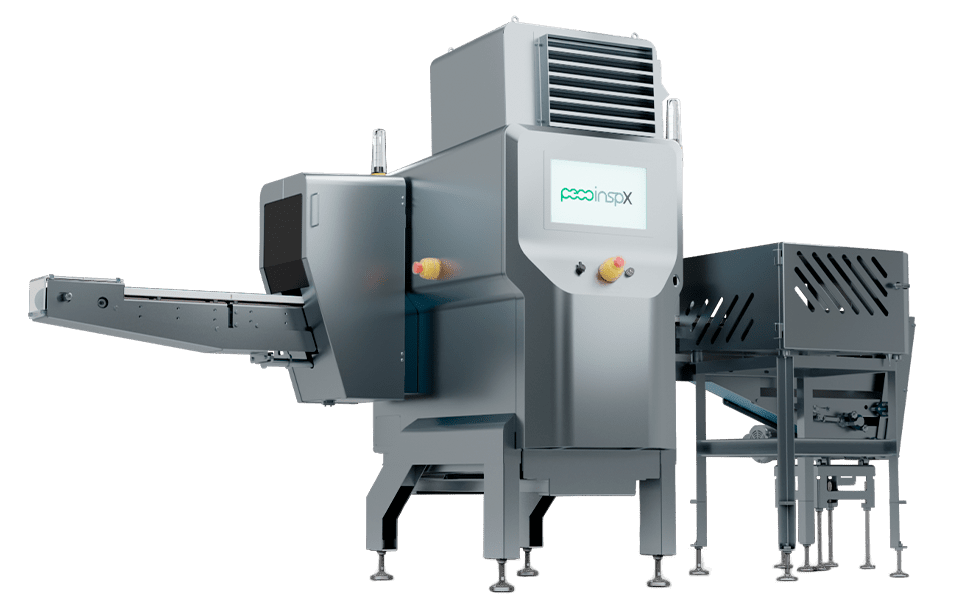
Peco InspX offers several X-ray inspections across the line for glass containers, from defect detection for empty glass to foreign material detection in filled containers. Peco X-ray Inspection provides best in class precision at line speeds so you can be confident in your quality without slowing down.
Foreign Material:
Leveraging advanced X-ray technology, the Peco InspX ScanTrac detects metal, glass, and dense plastics, specializing in providing enhanced precision in the punt area of the container, the most difficult area to detect.
Glass Defect Detection:
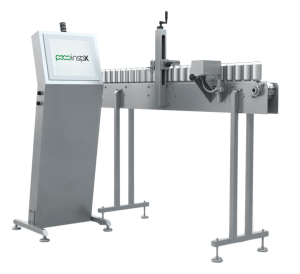
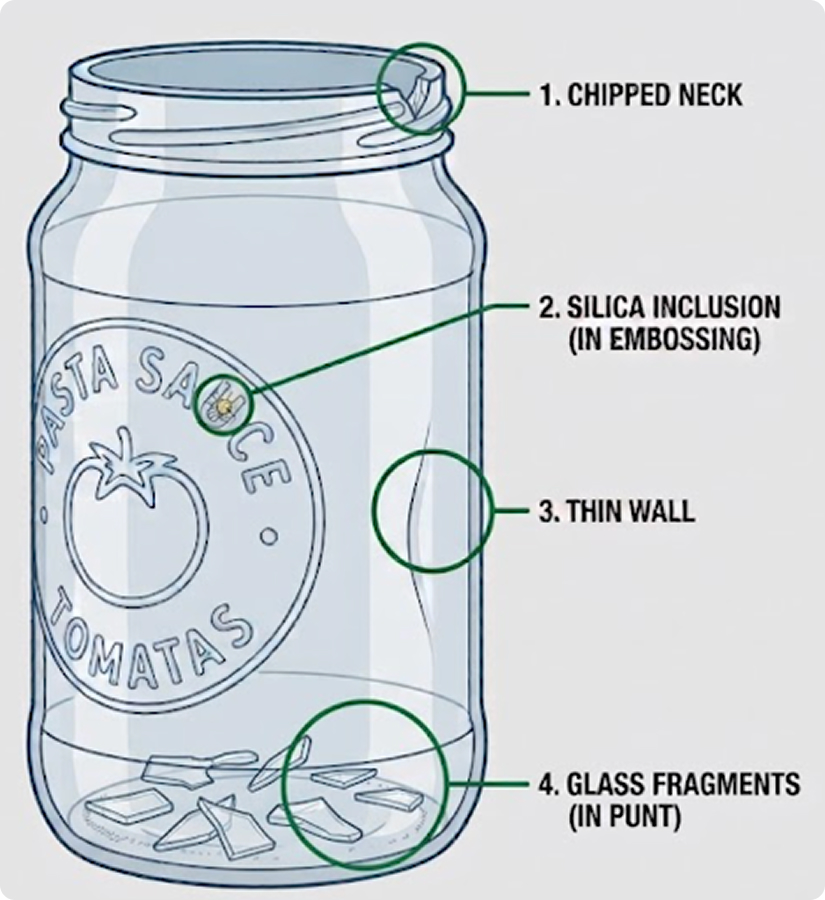
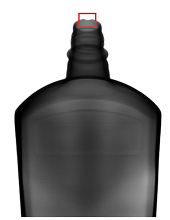
Peco InspX Empty Glass X-ray (EGX) provides full container inspection with X-ray, catching defects that vision systems struggle with like inclusions, thin wall, bent neck, chipped neck, and swung baffle. Because our systems measure density differences in glass, we see defects without being tripped up by colored glass, condensation, or embossing.
High Speed:
ScanTrac systems are capable of performing foreign material and glass defect detection at speeds ranging from 200 cpm for sauce jars up to 1800+ cpm for beverage bottles.
Non-Contact:
Peco InspX’s inspections are non-contact – installing directly over your existing lines and conveyors, with no hassle, no transfers and no need for expensive modifications that might slow down production.
Want to Learn More?
Provide your information below
to schedule a demo with Peco InspX.

Our new Shield Trio machine has eliminated glass breakages at the filler and capper, reducing downtime by 16 minutes per day.
EGX: Empty
Glass X-ray
Challenges:
Manufacturers are shipping more recycled glass than ever, which causes quality to suffer as contaminants are added to the mold. Inclusions, thin wall, bird swings, chips, swung baffles, and many other structural defects are increasing and going unseen by vision systems, causing breakages at the filler and capper and downtime on the line.
Solution:
By using X-ray to detect defects in glass before it is filled, Peco InspX can find defects like inclusions, thin wall, bird swings, and chipped necks before they reach the filler and capper, where breakages can occur.
X-ray vs. Vision:
Classic vision systems are great for finding cosmetic defects like scratches, cracks, and large inclusions that can be seen with the human eye, but when sight is impaired by color or shape variance in the glass they struggle and false reject rates can skyrocket. Peco InspX X-rays look beyond what the human eye sees and focus instead on minute changes in glass density. By monitoring these changes our X-rays easily spot small inclusions, thin walls, bird swings, chips in the thread and neck area, and swung baffles without having to worry about the color of the glass or whether it has a unique shape.
EGX vs. Vision Inspection
Capability
Peco InspX EGX
Vision / Camera Systems (EBI)
Container handling
Single position. Complete inspection without rotating the container.
Requires rotation. Container passed through banks of cameras to see all sides.
Wall Thickness / Density Measurement
Yes, simultaneous. Measured at the same time as defect inspection.
Not available.
Installation & Maintenance
Installs over existing conveyors. No container contact, no added transfer points.
Separate conveyor or positioning apparatus. Required for rotary or in-line bottle inspectors.
Changeover Between Container Types
No physical changeover required. Across multiple container dimensions.
Physical adjustment required. Camera positions and angles must be calibrated, especially for diameter changes.
Embossed or Wet Containers
Fully inspected. Complete inspection of threaded necks and sidewalls regardless of embossing or moisture.
Degraded performance. Embossing and moisture cause poor image quality and higher false reject rates.
Design Focus
Built for today’s concerns. One-way glass traveling long distances between molding and filling.
Built for a different era. Originally developed for two-way (returnable) glass concerns largely absent today.
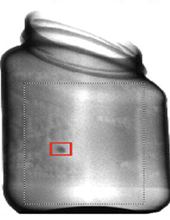
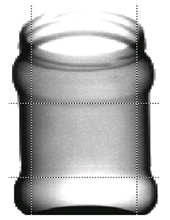
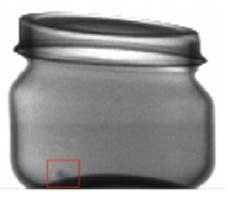
EGX X-ray Images
Filled Glass X-ray
Challenges:
Whether it’s pickle jars, baby food jars, or bottles of soda, the most difficult part of any glass container to inspect has always been the punt. X-ray systems traditionally struggle to find contaminants in this area because the X-ray beam usually comes from one side of the container and the punt creates an obstruction to the other side. Unfortunately, in most products packaged in glass, the most likely place for a contaminant to end up is around the punt.
The Solution:
Peco InspX systems solve for this by allowing customers to either see around the punt or over the top of it.
ScanTrac Trio and Trio Plus:
The ScanTrac Trio provides a three beam solution that examines the container from left, right, and center, allowing us to see contaminants in all areas of the punt. The Trio Plus does the same for containers that are much taller, like wine or liquor bottles.
ScanTrac Glissando:
The ScanTrac Glissando solves the punt problem by employing two X-ray beams, one that looks at the punt straight on and one that looks down at an angle from above, allowing us to easily see contaminants on the other side.
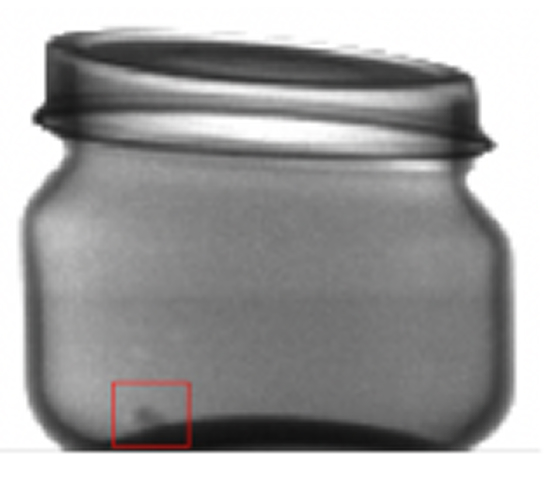
Glass-in-Glass Detection
Capability
Peco InspX EGX
Other X-ray Vendors
Full Container Inspection
Yes, no masking. Difficult zones (punt, heel, finish) are fully inspected, not excluded.
Masked. Critical zones excluded to manage false rejects.
360 Degree Coverage of the Punt
Yes. Multi-beam design eliminates blind spots hidden behind the punt.
Limited. Other X-ray designs can miss contaminants hidden behind the punt.
Detection Algorithm Testing
Built and tested on real shards. Irregular, real-world glass shard shapes, not just uniform test pieces.
Often tested on cubes or spheres. Uniform test shapes are meaningfully easier to detect than irregular shards, and many samples are made of HD glass that does not simulate the glass found in most facilities.
Sensitivity - Punt Area (Hardest Zone)
4mm SLG. Soda lime glass detection in the punt, the most difficult area to inspect.
Not typically published. Punt-area sensitivity is rarely tested or disclosed.
Sensitivity - Body
2mm SLG. Soda lime glass detection in the body.
Commonly the headline spec. The body is the easiest zone to test and the number most often published.
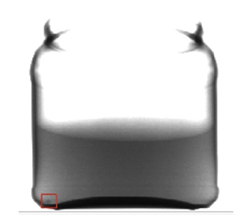
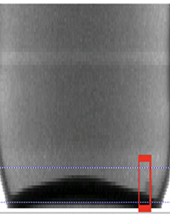
Filled Container X-ray Images
Inspection Solutions